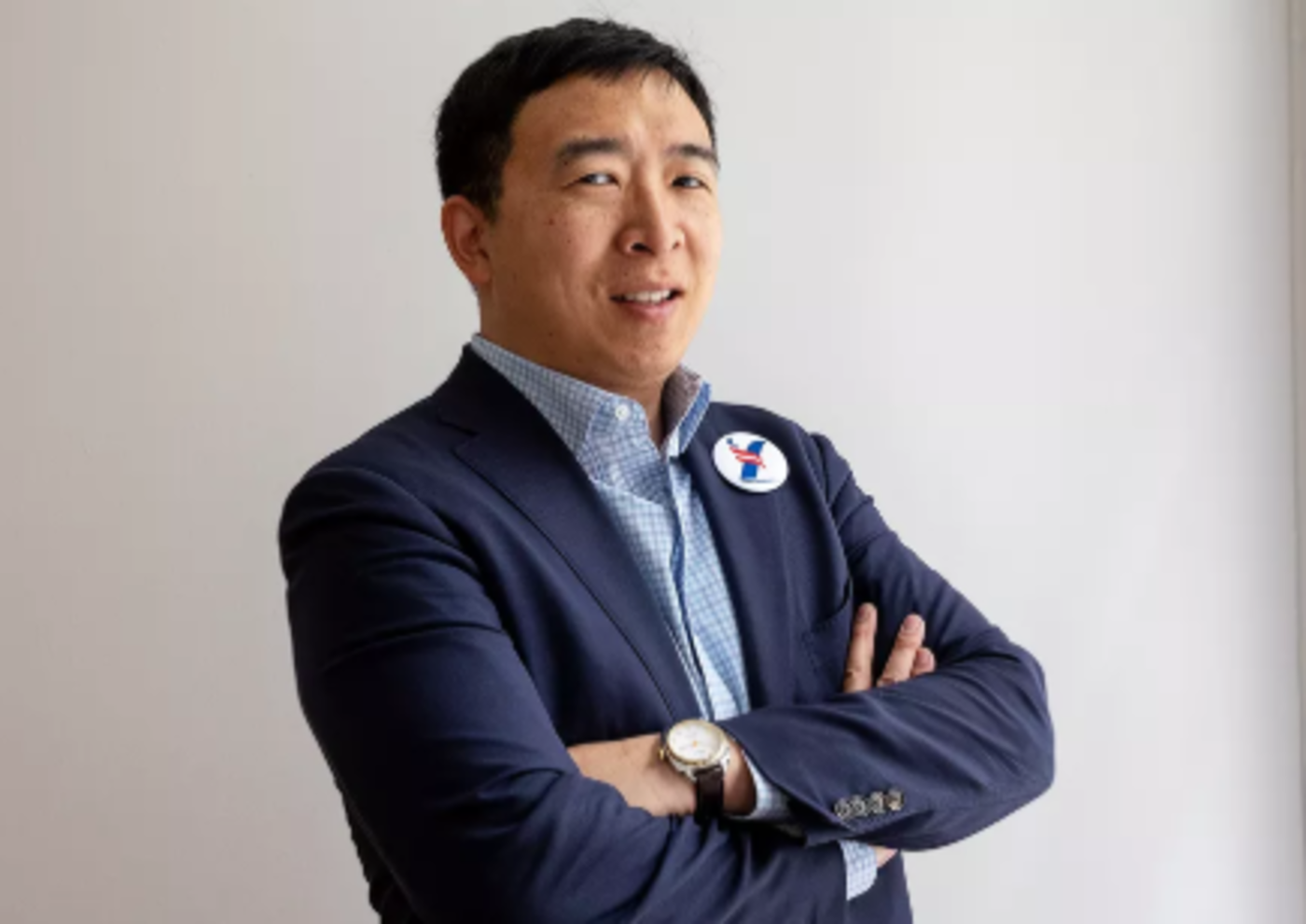
The Non-Traditional Career Path of a Lawyer Who Has Become a Presidential Candidate
But he soon changed track to now be in the position of being a Democrat presidential candidate after building an internet business that made him his fortune.
The big firms were all paying first-year associates $125,000 a year after Yang graduated, plus bonuses could add tens of thousands of dollars more. Yang had borrowed almost $120,000 to pay for Columbia. So a Big Law salary was a smart way to “get some return on investment,” Wu said.
Wu and Yang both accepted offers from Davis Polk.
“It really weighed on him that he wanted to do something purposeful with his life,” Wu said. “He hadn’t thought it through at that time. I think he thought, I’ll try Big Law and get some return on investment. And go from there.”
He and colleagues worked 80-plus-hour weeks reviewing documents and contracts, writing summaries for senior partners, running to the printer. They wore suits, ate meals in the firm’s cafeteria and played basketball to unwind.
But after five months he left the job.So what happened to the law?
The Washington Post say that he frequently refers to his lawyer days as “the five worst months of my life.”
“Working at a law firm was like a pie-eating contest, and if you won, your prize was more pie.”
The law jokes play well, especially because seven of the 12 candidates in the last televised Democratic debate have law degrees.
But quitting law was not really about walking away from something. It was more about running toward something else that was calling to him with a sudden, urgent clarity.
So just before the start of the new millennium, Yang and another refugee from his law firm created an Internet start-up to help celebrities use their fame to raise money for charity.
It flopped. He went broke, lost his apartment, lost weight and confidence, and wondered (along with his worried parents) how he was going to pay off $110,000 in law school debt.
But Yang was remaking himself.
He said he doesn’t regret studying law, which made him more “structured and detail oriented.” On the other hand, he said, the cautious analysis taught in law school can get in the way of an entrepreneur who needs to make decisions quickly, often based more on instinct than data. He said he had to “unlearn” some of what his law professors taught him.
